

In-house Product Design at Versuni (Former Philips Domestic Appliance)
Contributing across research, interaction design, prototyping, and validation within a confidential smart cooking project.
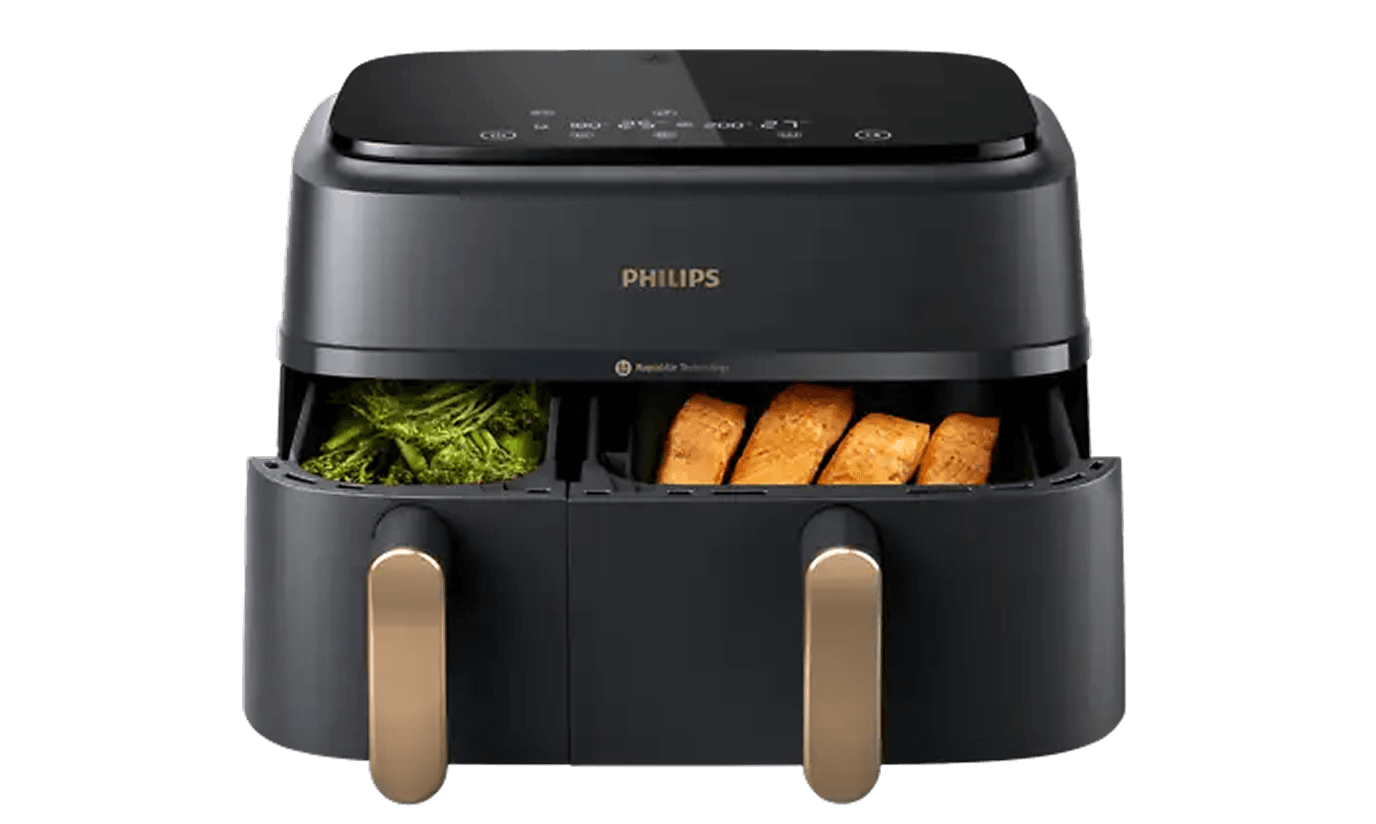
Overview
In-house Product Development at Versuni
My second internship gave me the opportunity to work in an in-house product environment and experience how a product evolves through a real development process.
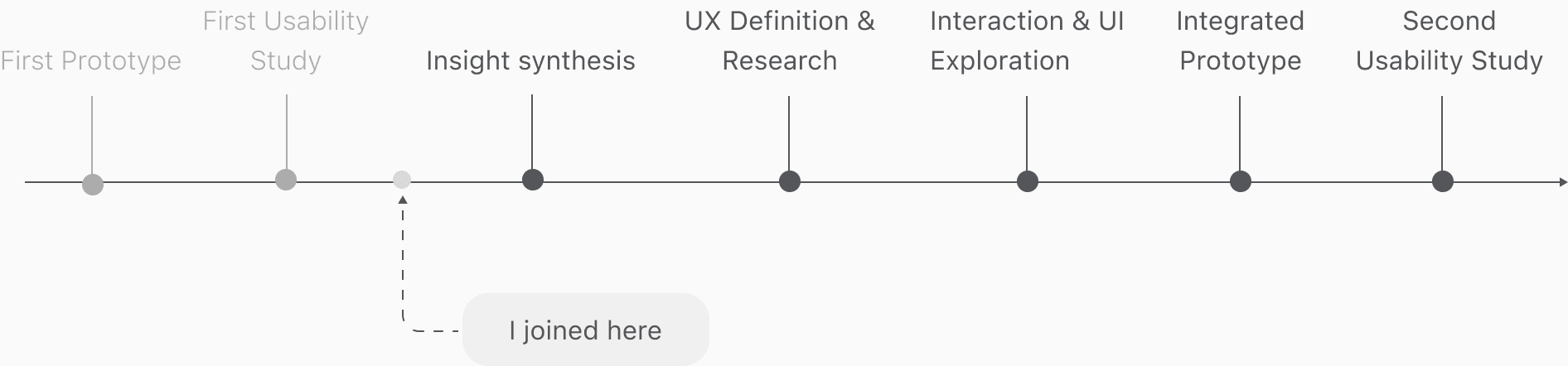
I joined an ongoing confidential smart cooking project after its first prototype and usability study, contributing across research, UX definition, prototyping, testing, and refinement.
My Role & Contribution
Project Ownership
Research & Alignment
I helped synthesize insights from the first usability study, participated in workshops to define UX fundamentals, and conducted competitive research on existing smart cooking products.
Interaction & UI Direction
I took stronger ownership in translating the team’s UX direction into concrete screen-based experiences, shaping interaction flows, information hierarchy, and the overall visual direction of the interface.
Prototype & Validation
My screen designs were implemented into a testable appliance prototype and used in subsequent usability studies. I then contributed to refining the experience based on feedback from both internal and external testing.
Project timeline
Where I Joined the Process
Insight Synthesis
Turning Early Feedback into Design Directions
Synthesizing the first round of feedback
Clustered findings from the initial usability study to identify recurring patterns and discussion areas.
Defining UX fundamentals
Joined workshops to align on the overall use flow, the role of each touchpoint, and the product’s interaction principles and tone of voice.
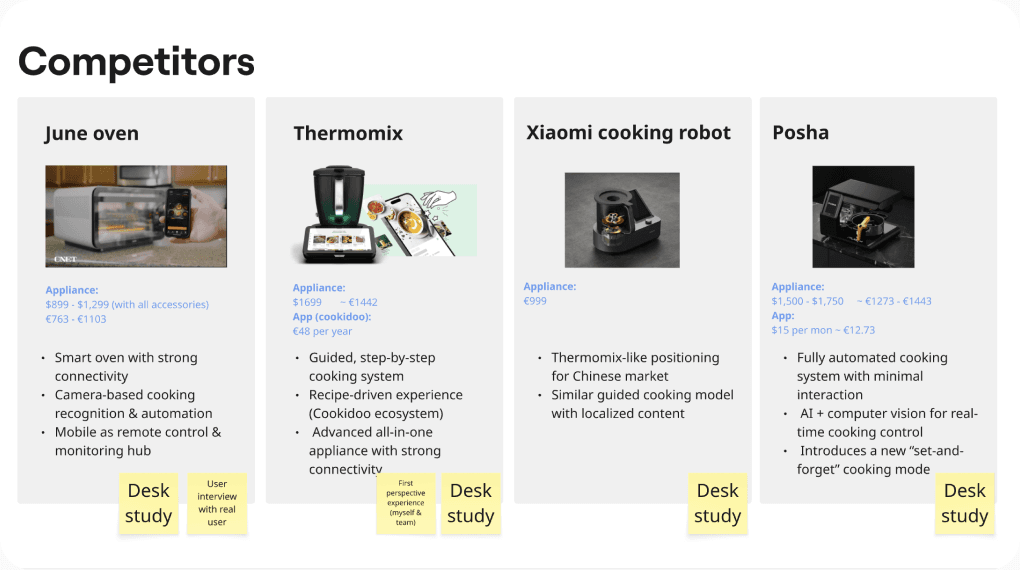
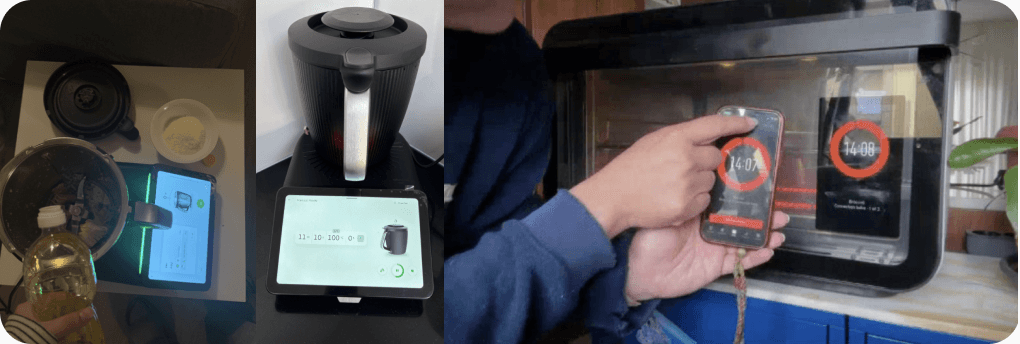
Building a shared market reference
Explored existing smart cooking products to extract interaction patterns and design takeaways that informed the concept direction and supported cross-team alignment.
Design Iteration
Turning Early Feedback into Design Directions
Together with team, I defined the visual and interaction direction for the appliance UI, exploring how information, feedback, and controls could work within the physical constraints of the screen.
Design Validation
Validating the direction
The selected direction was implemented in a testable prototype and evaluated in a moderated user test, focusing on usability, interaction clarity, and confidence during cooking tasks.
What we tested
Focused on whether users could understand the interaction flow, identify key information, and confidently move through cooking tasks.
What we observed
The test highlighted where information hierarchy, guidance, and system feedback needed to be clearer during multi-step interactions.
How it informed the design
Findings were brought back into the design process to refine interaction details and improve clarity before further development.
Reflection
Compared with my consultancy experience, working in-house gave me a closer view of how design decisions evolve through a real product lifecycle. I learned to balance usability with hardware, engineering, business, and implementation constraints while taking broader ownership from research through validation.